Lifestyle cabling and power products
Fundamental Building blocks
High Performance
Reference Level
Boundless possibilities through Technology
Reference grounding system for analog and Digital components
Reference power delivery system with 6 ports of exceptionally quiet system grounds
State-of-the-art Current and Voltage delivery with industry-leading technology for a stable reference system and chassis ground.
Cable families
Power appliances
Speaker cables face a very different set of challenges than line‑level interconnects. Instead of carrying small signals into high‑impedance inputs, they must link a low‑impedance, high‑current power amplifier to a loudspeaker whose impedance and phase angle vary continuously across the audible band.
At this interface, several issues must be controlled simultaneously:
A true reference‑grade speaker cable must manage all of these while remaining as electrically “invisible” as possible to both amplifier and speaker.
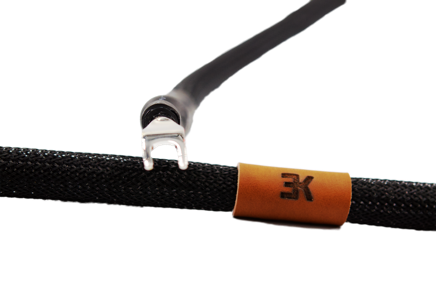
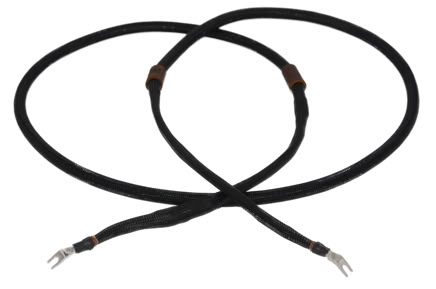
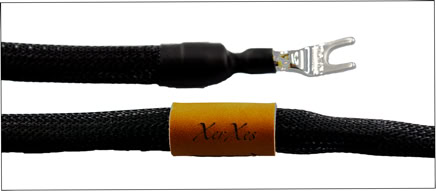
The XerXes Reference Speaker Cable is built specifically to address the electrical stresses at the amplifier–speaker interface.
A carefully tuned, multilayer dielectric system surrounds each conductor to reduce inductive and capacitive coupling between the positive and negative poles. This minimizes stored energy, pole‑to‑pole interaction, and frequency‑dependent reactance, helping the amplifier maintain control over the speaker across the full audio band—especially at high current and voltage swings.
Low series resistance and controlled geometry keep group delay and phase shift extremely small, so transient response, damping, and tonal balance remain stable from low bass through the top end.
XerXes uses a four‑cable stereo configuration, providing separate, optimized paths for each channel and allowing integration of auxiliary components or configurations (such as dedicated runs, bi‑wire/bi‑amp schemes, or future system changes) without compromising core performance.
In practice, the result is explosive and controlled dynamics, stable imaging, natural presence and pace, and preserved low‑level detail.
Effective Wire Gauge: 8 (3 cores with. 5 modes)
Dielectric: multi-modal with varying electronegativity
Shielding: EMI/RFI internal and external
Connector Bond: Exothermic high-temperature
Distortion preemption: Directional passive energy network
Geometry: Bilateral symmetry with physically separate positive and negative cables
Base Configurations:
Enklein a division of Audio Union International LLC copywrite 2025